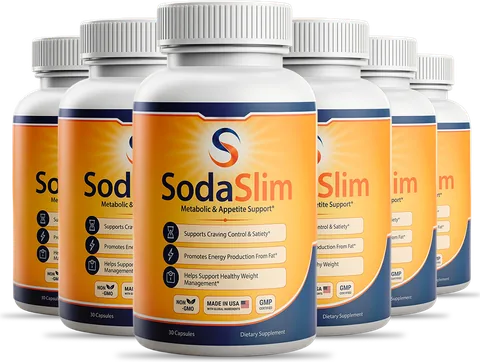
The four ingredients listed by the brand for SodaSlim™ have very different origins. Ginger is a tropical root, berberine is a yellow compound found in certain shrubs and roots, sodium bicarbonate comes from mineral deposits and industrial chemistry, and NAD+ is a molecule first identified in early twentieth-century laboratories.
Four ingredients, four different stories · Ginger: a rhizome with a long travel record · Berberine: the golden-yellow compound · Sodium bicarbonate: from mineral deposits to the pantry · NAD+: a laboratory discovery
- Ginger root is grown across tropical and subtropical regions.
- Berberine is a plant compound with a golden-yellow color.
- Sodium bicarbonate traces back to mineral deposits and 19th-century chemistry.
- NAD+ was first described in laboratory research.
Four ingredients, four different stories
Ingredient lists look flat on a bottle, but each name carries a history. One comes out of the soil, one from a shrub, one from a mineral deposit, and one from a research bench. This post is purely a tour of origins, botany and chemistry history. It describes where things come from, and nothing more.
If you want the plain list first, the formula page names the four ingredients as listed by the brand, and the what is SodaSlim overview gives the bigger picture.
Ginger: a rhizome with a long travel record
Ginger is the underground stem, or rhizome, of a tropical plant native to Southeast Asia. Growers have cultivated it for thousands of years, and it traveled ancient trade routes long before modern shipping. Today it is grown in warm, humid regions around the world, from India and China to parts of Africa and Latin America.
The brand states that the gingerol in SodaSlim comes from a standardized ginger extract. Gingerol is the pungent compound that gives fresh ginger its bite, and an extract is simply a concentrated preparation made from the root.
Ginger plants never grow from seed in commercial fields. Farmers plant small pieces of rhizome, and each piece sends up green shoots while the root thickens below. After roughly eight to ten months, the harvest begins, and the roots are washed, sorted and either sold fresh or dried.
Ready to start your routine?
SodaSlim: a once-daily morning capsule, one a day before breakfast, with a 60-day money-back guarantee.
Order SodaSlim NowBerberine: the golden-yellow compound
Berberine is an alkaloid, a plant compound with a distinctive yellow color. It has been isolated from several shrubs and roots, including barberry, goldenseal and certain species used in traditional dye-making. Textile workers in some regions once used berberine-bearing roots and bark to color fabric a rich yellow.
Botanists like berberine because it makes the plant's inner tissue glow. Cut a berberine-rich root open, and the color is hard to miss.
The compound belongs to a large family of alkaloids, a group botanists have catalogued for more than two centuries. Many plants in that family are familiar from gardens, which is one reason berberine-bearing shrubs are often grown as ornamental hedges with bright yellow wood beneath the bark.
Sodium bicarbonate: from mineral deposits to the pantry
Sodium bicarbonate occurs naturally in mineral deposits and mineral springs, and it has also been produced industrially since the nineteenth century. It is better known as baking soda and has been a pantry staple for generations. The brand describes the version in SodaSlim as pharmaceutical-grade, which refers to a purity standard.
For more on how dietary ingredients are generally described, the NIH Office of Dietary Supplements is a trusted reading list.
Large-scale production usually involves a chemistry process that starts with common salt and limestone-derived materials, then refines the result to the desired grade. The end product is the same fine white powder bakers have trusted for generations.
NAD+: a laboratory discovery
NAD+ stands for nicotinamide adenine dinucleotide. Researchers first described it in the early 1900s while studying fermentation in yeast, and it has been a recurring subject in biochemistry labs ever since. Unlike the other three entries, it did not come from a shrub or a rock; it came from a bench, a flask and a great deal of curiosity.
Taken together, the lineup spans botany, mineralogy and biochemistry. To see how the pieces come together in one daily capsule, read how SodaSlim works.
The molecule is found throughout living cells, which is partly why it attracted so much early attention. Supplement-grade versions are prepared in controlled production settings rather than harvested from any plant.